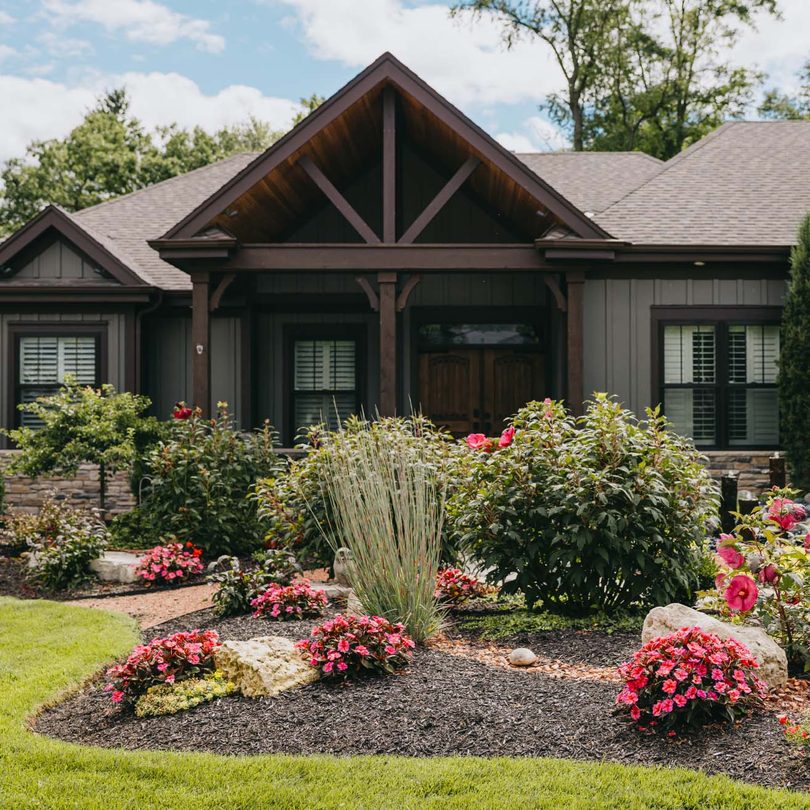
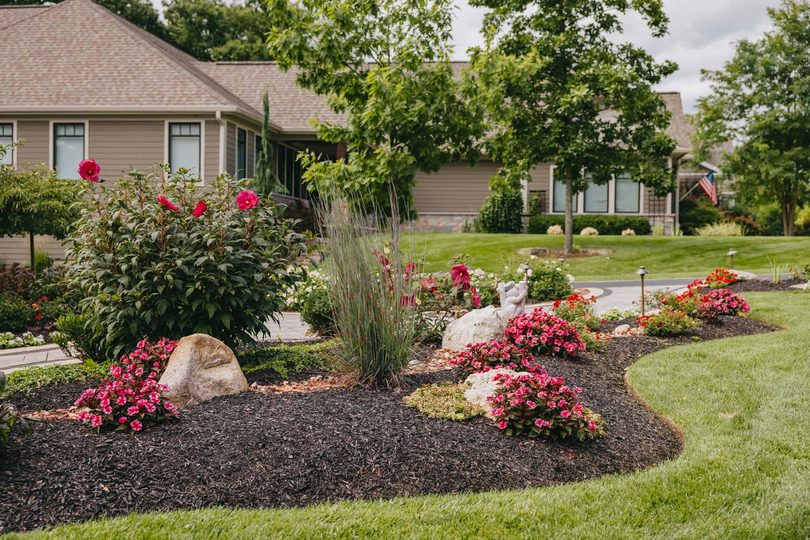
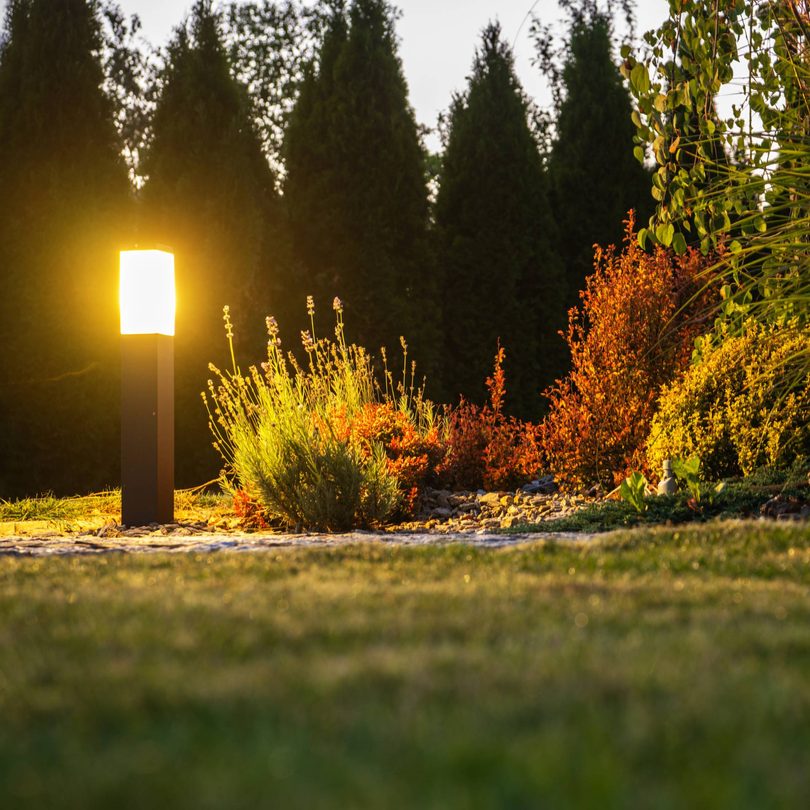
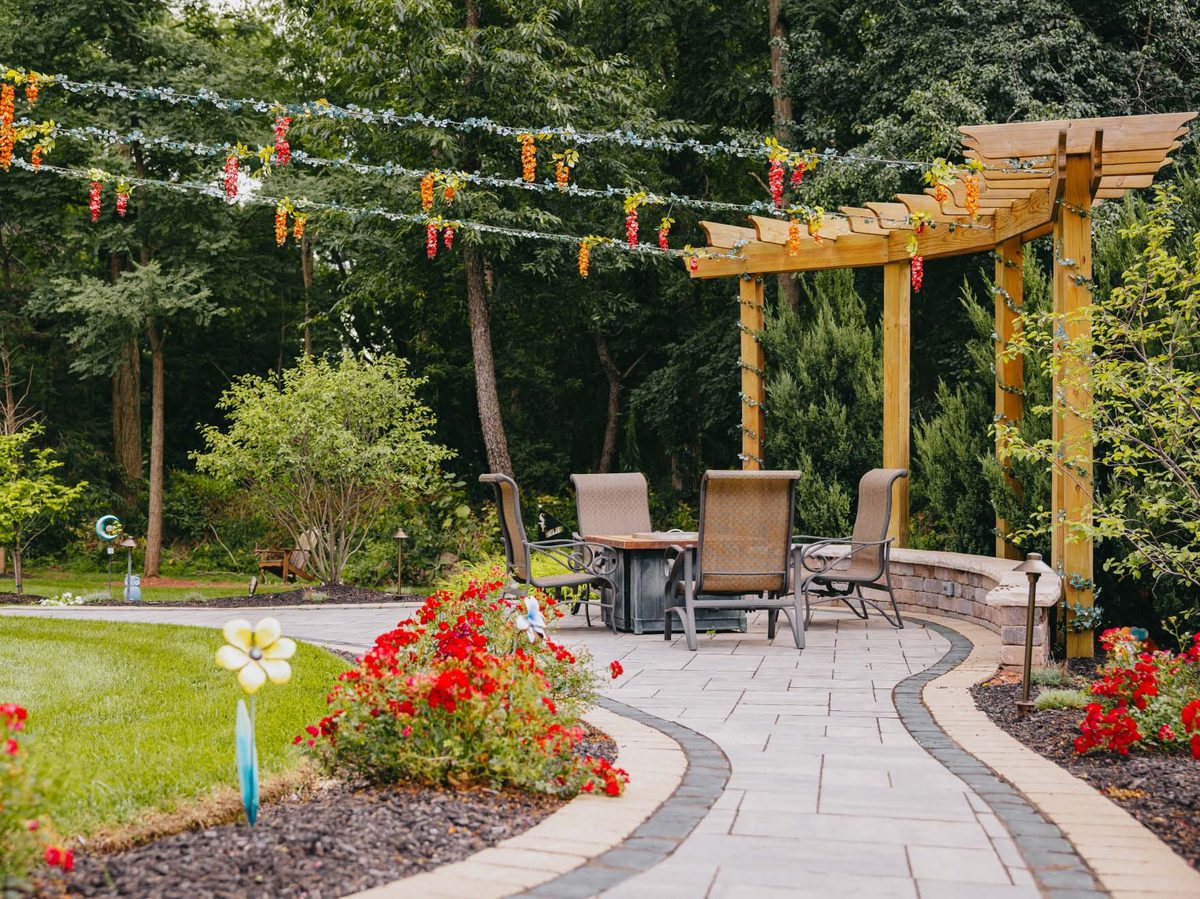
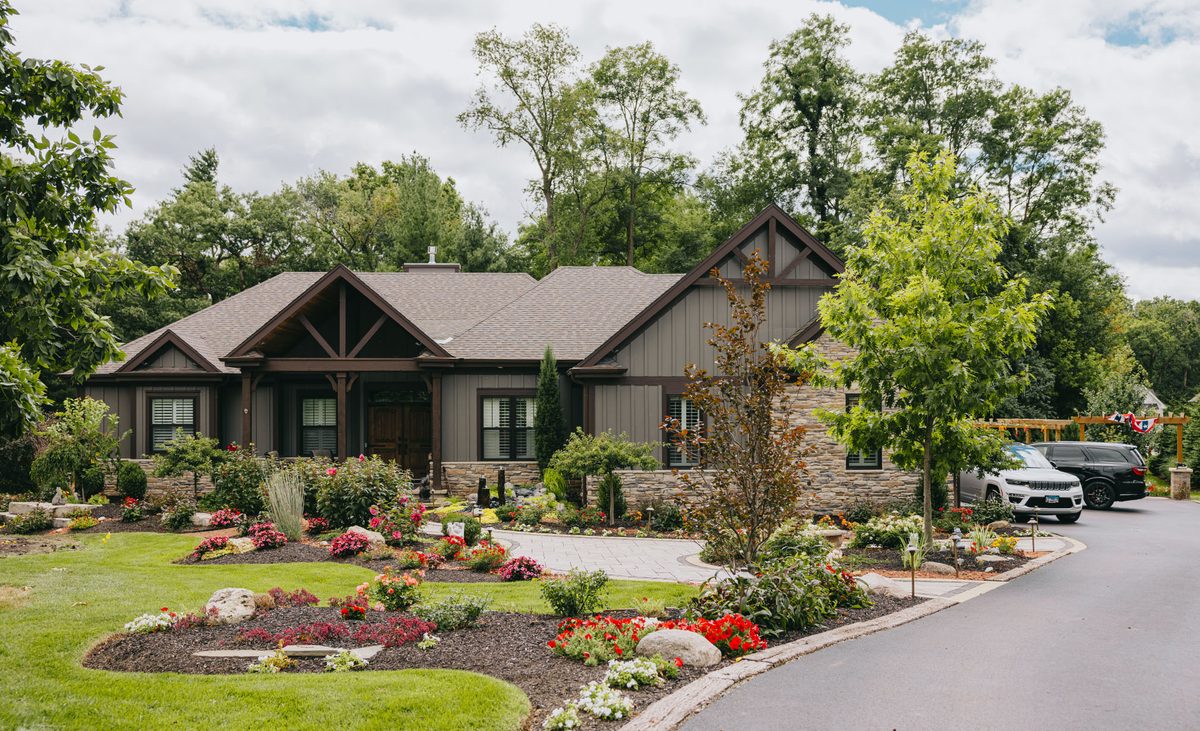
Second-act work on South Elgin yards: replacing the builder's landscape with something chosen for the house rather than the subdivision.


South Elgin had about 7,500 people in 1990 and close to 24,000 by 2020. Almost everything residential here went in during that stretch, which means a very large share of the village is living with its original builder landscape at roughly the same age.
That is most of the work in this town. Foundation shrubs planted to look tidy on closing day are now over the windows, the beds have shrunk into the lawn, and the grading has settled. Not everyone wants to jump straight to a full rebuild either — here is what to do when you are not ready for a paver patio yet. For everything we do, see our services, or the other towns we serve.
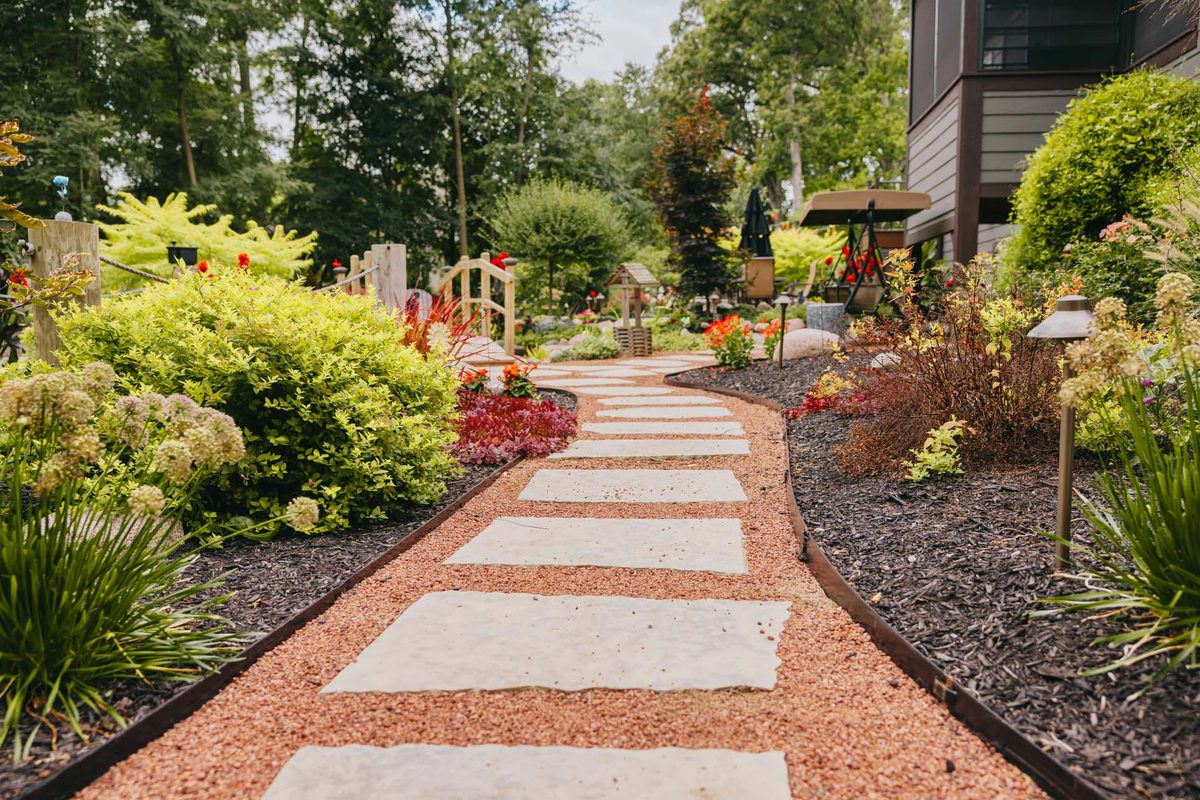
South Elgin tripled in size between 1990 and 2010. Streets that went in together are ageing together, which is why so much of the work here looks the same from one address to the next.

The landscape that came with the house was chosen to sell it, not to live with for twenty years. Shrubs sized for the day they went in now cover windows and crowd the walkways.

Whole streets were planted in the same season from the same plant list, so they reach the end of their useful life together. If the neighbours' yards look tired, yours is on the same clock.

The village allows construction between 7 a.m. and 9 p.m., and inspections need at least 24 hours notice. A residential fence carries a forty dollar building permit fee. Straightforward to work with, as long as the schedule respects the hours.
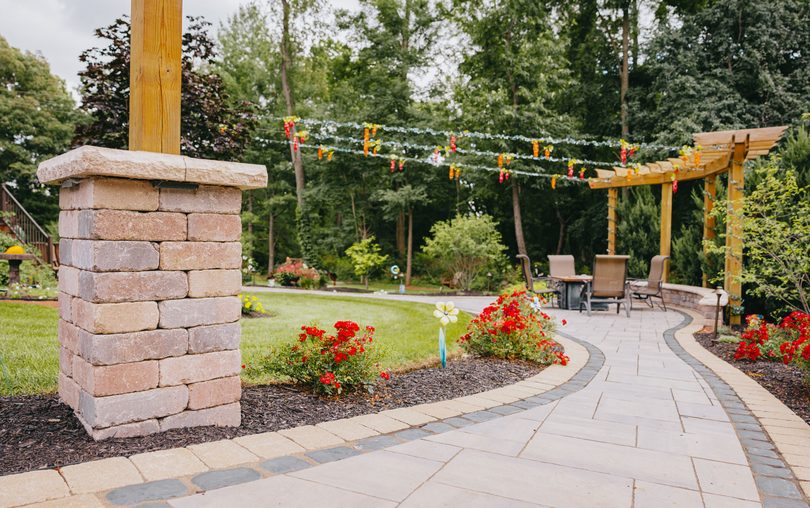
Most South Elgin houses came with a plain concrete slab off the back door. Replacing it with a proper paver patio is the single biggest change you can make to a yard this age.
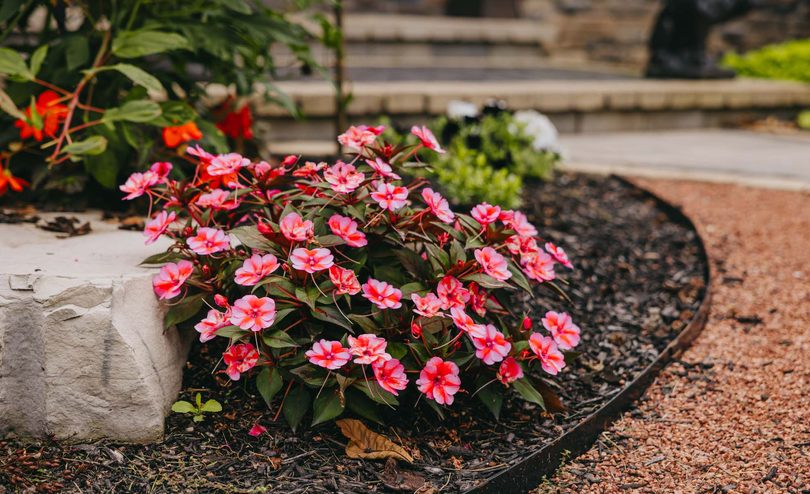
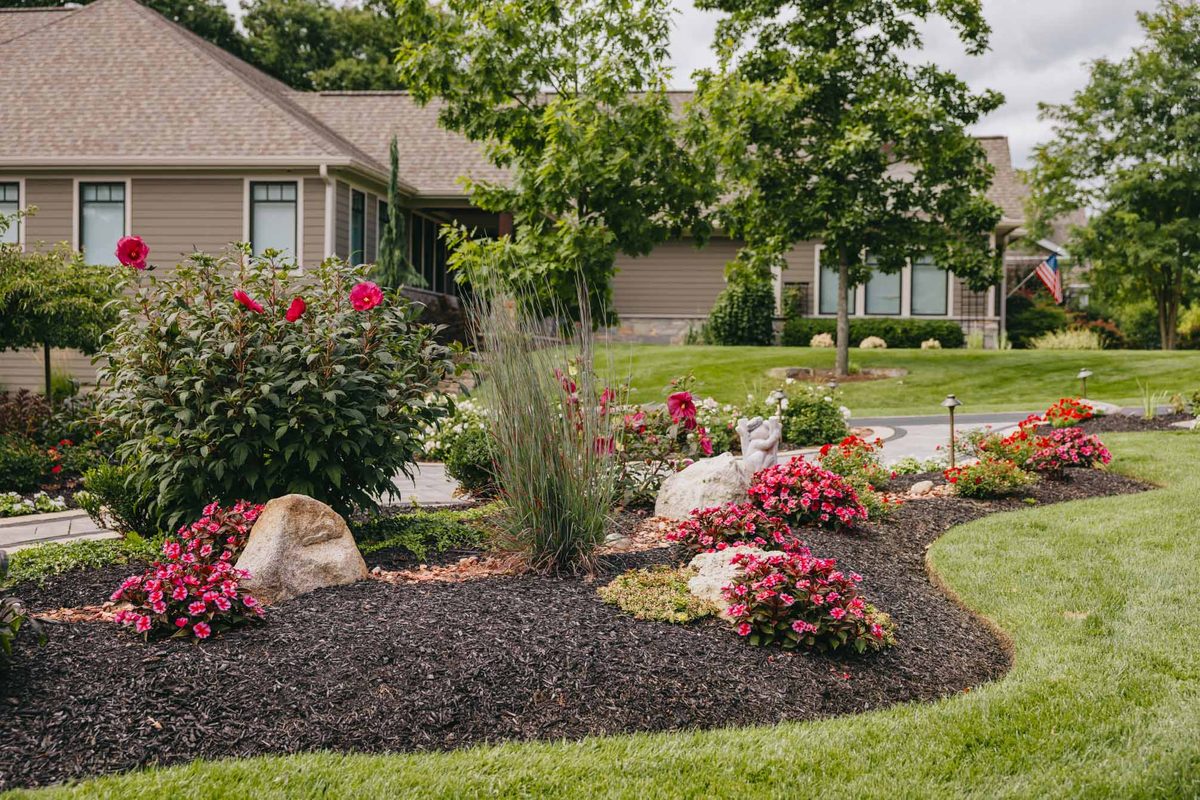
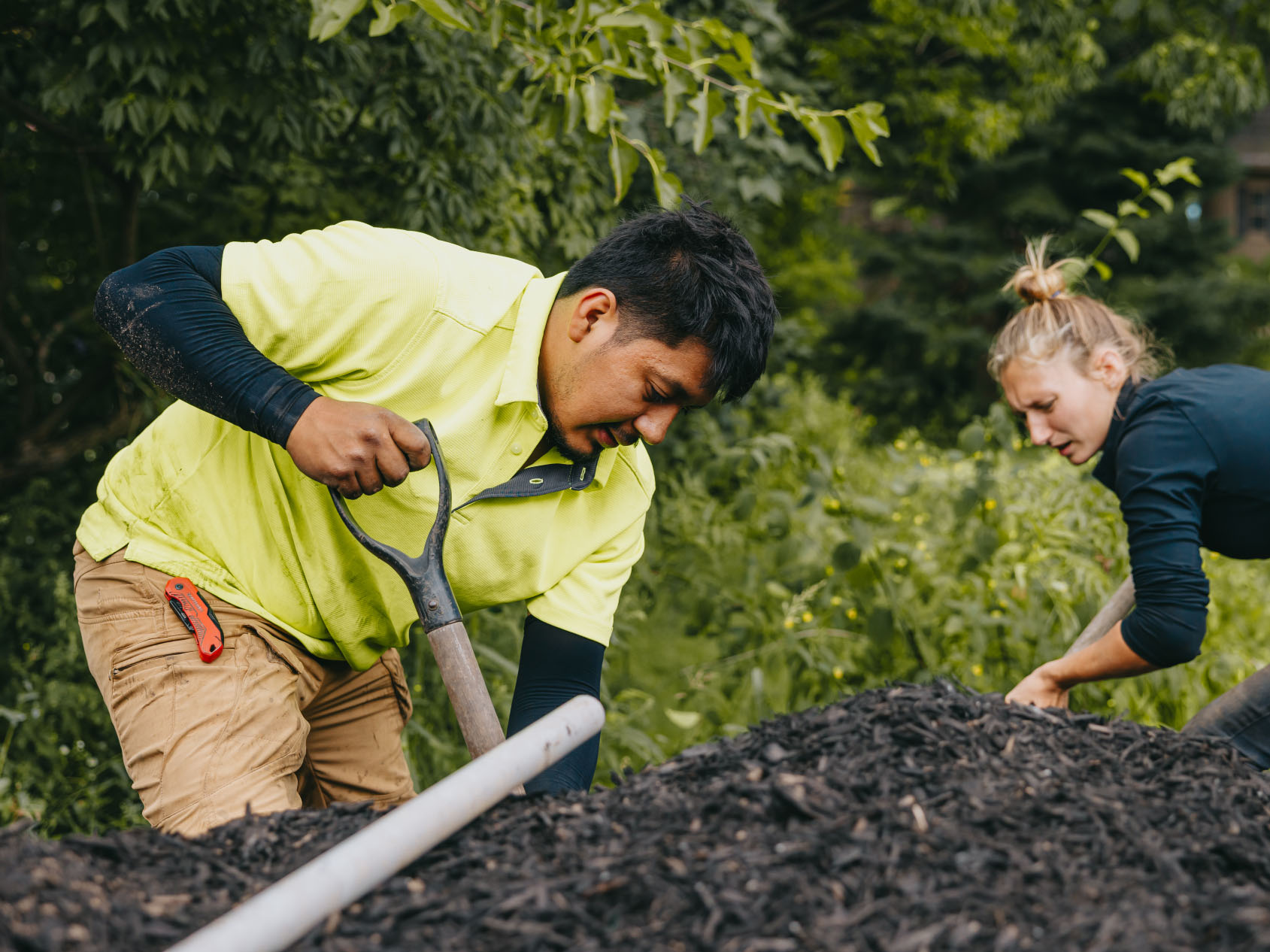
Twenty-year-old beds need more than a fresh top coat. We cut the edge back, correct the depth, and keep it off the trunks, which is where most of the damage gets done.
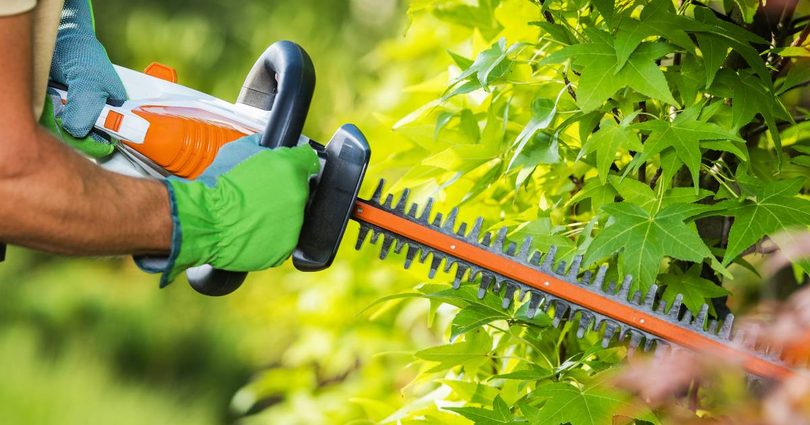
Builder shrubs are usually the right plant in the wrong quantity. Cutting them back on a schedule is cheaper than replacing them, right up until it is not.
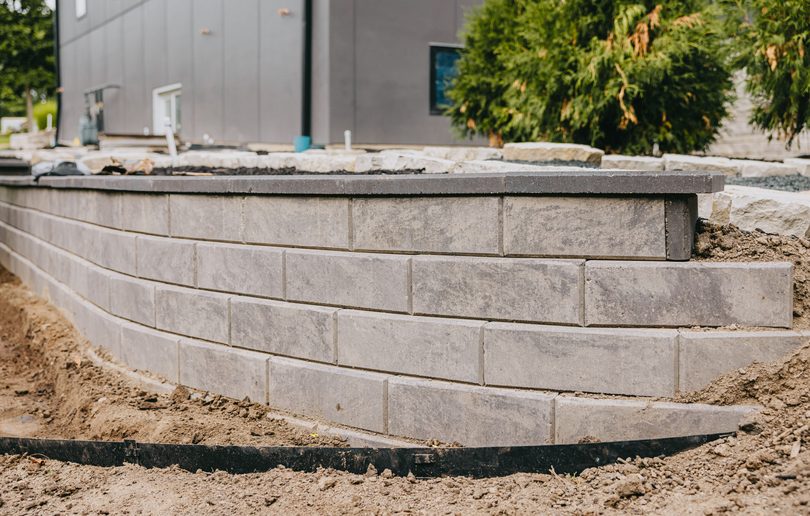
The next town north. Tiered retaining walls, drainage correction and new planting beds edged in natural stone.
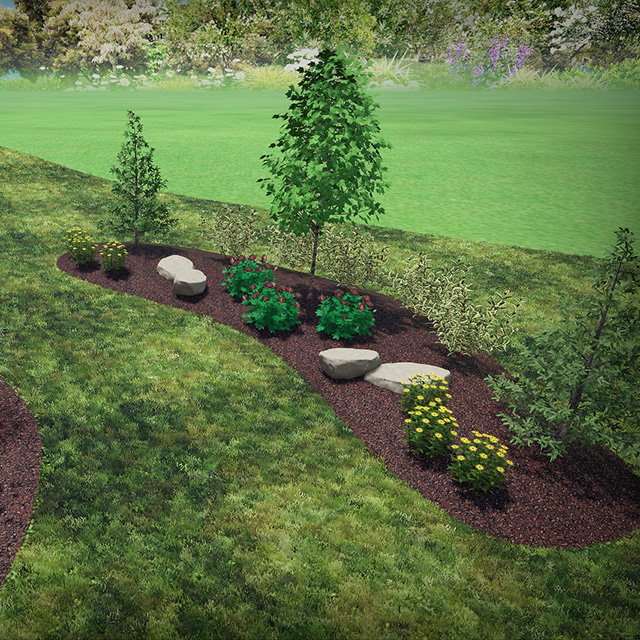
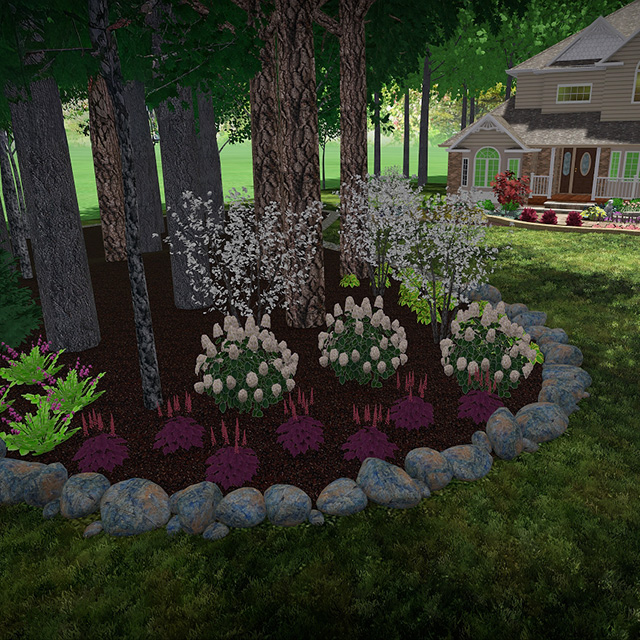
Further west. A full property redesign built off a 3D plan, including a shaded woodland bed across the front of the house.
What homeowners here ask us most, answered straight.
In general, most construction work requires a permit here. A residential fence carries a forty dollar building permit fee. Inspections are part of the process and need at least 24 hours notice, and the village allows construction work between 7 a.m. and 9 p.m. Community Development is at (847) 741-3894, and it is worth a call before assuming a project is exempt.
Because it was planted at once. South Elgin went from roughly 7,500 people in 1990 to nearly 24,000 by 2020, and the subdivisions that filled in during that stretch were landscaped on the same schedule from the same plant list. Builder-grade shrubs have a useful life, and a street's worth of them reaches the end of it within a season or two of each other.
Cutting back, until it is not. Staged hard pruning over two or three seasons costs a fraction of replacement and keeps mature structure you cannot buy. But a plant that was always too large for its spot will be back over the window in three years, and at that point you have paid twice. We will tell you which yours is before you commit.
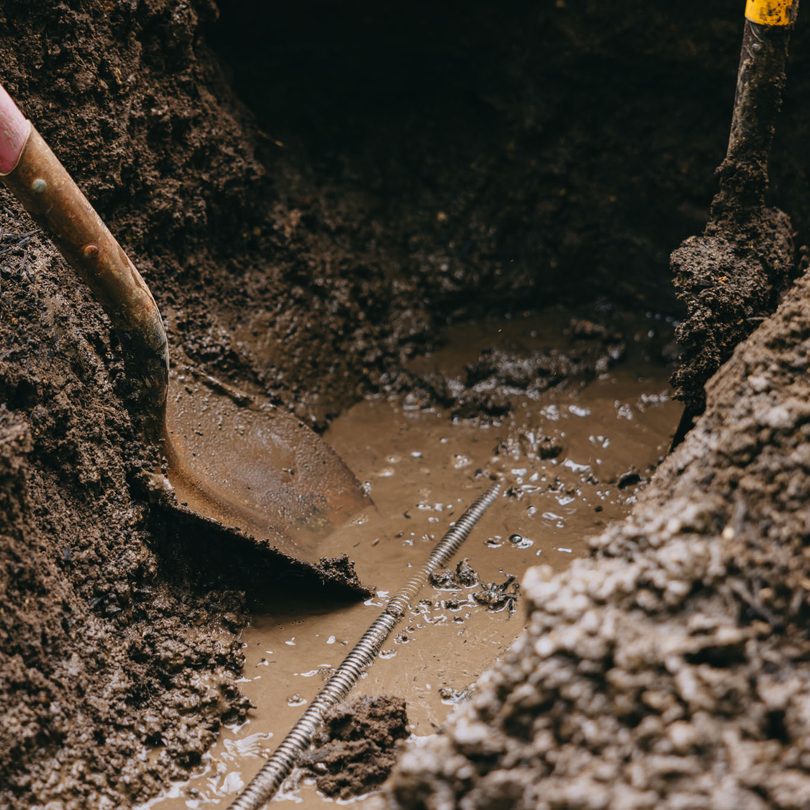
Yes, and out here it is the most common way people do it. The front is what you and everybody else looks at daily, and it is usually where the builder plantings are worst. Staging it also spreads the cost across seasons. The one rule is that grading and drainage get sorted in the first stage rather than the last, because everything else sits on top of them.
Permit and code requirements described on this page reflect Village of South Elgin guidance published as of September 2026. Fees and codes change. Confirm current requirements with the village before starting work.
South Elgin sits directly between Elgin and St. Charles, and we are in that corridor most weeks of the season.
Tell us what the builder left you and we will tell you what is worth keeping. Free on-site estimate, no pressure.