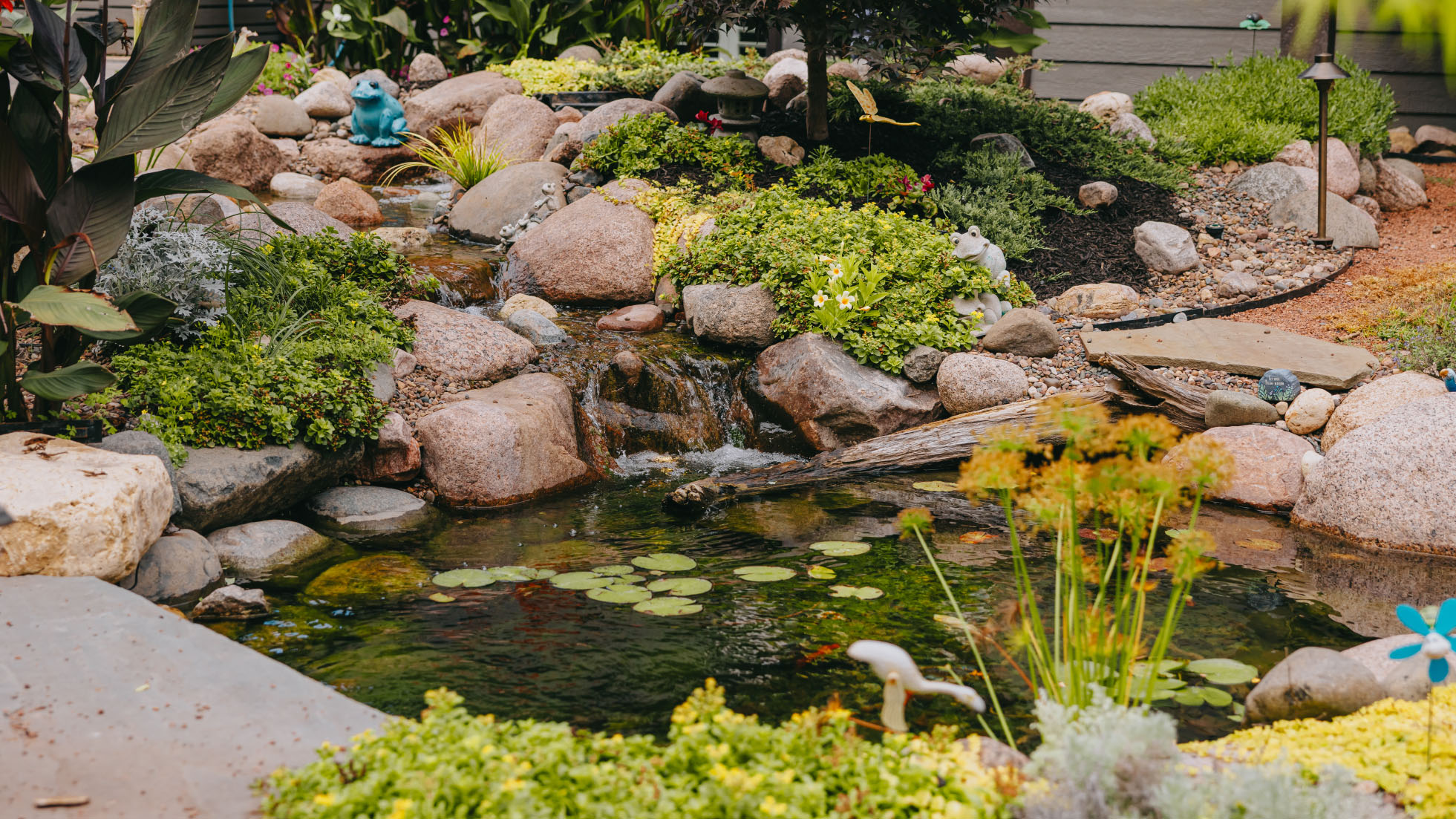
Drainage & Grading in DeKalb & Sycamore
Effective drainage and grading are essential for maintaining a healthy landscape. They prevent water accumulation, protect your plants, and enhance the overall beauty of your outdoor space.


Fixing Standing Water and Soggy Yards on Clay Soil
A stunning outdoor space starts below the surface. Without proper grading and drainage, even the most beautiful landscapes can suffer from erosion, pooling water, and costly long-term damage.
Foundation First: Building Landscapes That Last
Drainage and grading are the unseen heroes of every successful landscape. Poor water management can cause standing puddles, soil erosion, foundation damage, and plant loss.
With smart drainage systems, we ensure excess water is carried off efficiently preventing costly problems before they start.

Prevents Water Damage
Proper drainage protects your home’s foundation, basements, patios, and hardscapes from costly water intrusion and structural damage.

Stops Erosion
Smart grading keeps your soil where it belongs, preventing erosion that can damage plants, destabilize land, and ruin the beauty of your property.

Healthier Plants
Good water flow prevents root rot, mold, and disease creating a thriving environment for trees, shrubs, flowers, and turf.
Our Drainage and Grading Process
Stay updated by following our project timeline. Every phase is structured to guarantee quality and efficiency.
Step 1
Thorough Site Assessment
We evaluate the current grading, soil conditions, and drainage patterns of your property.
Step 2
Customized Plan Design
Our team presents a tailored design proposal based on your preferences. We ensure it aligns with your budget and vision.
Step 3
Professional Installation
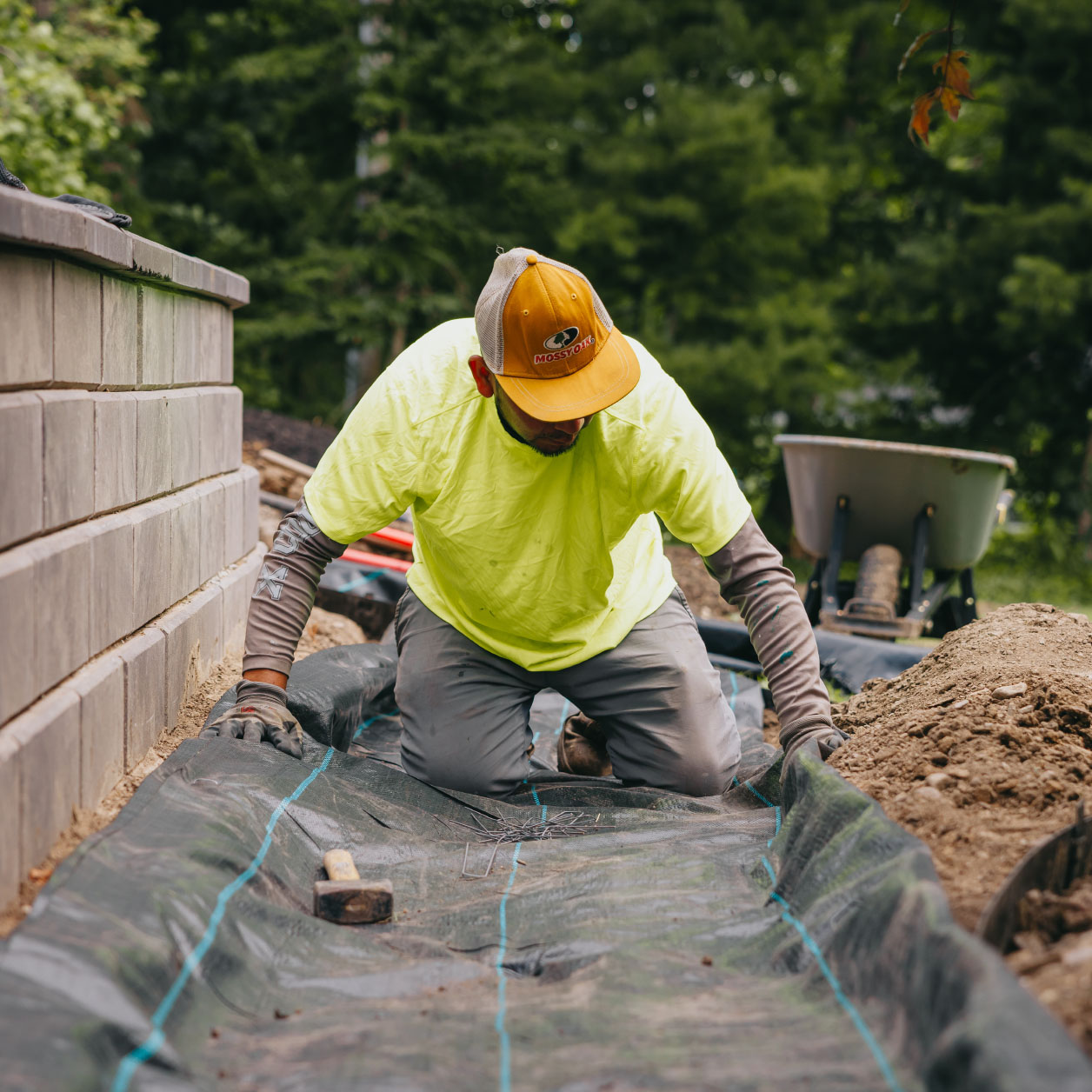
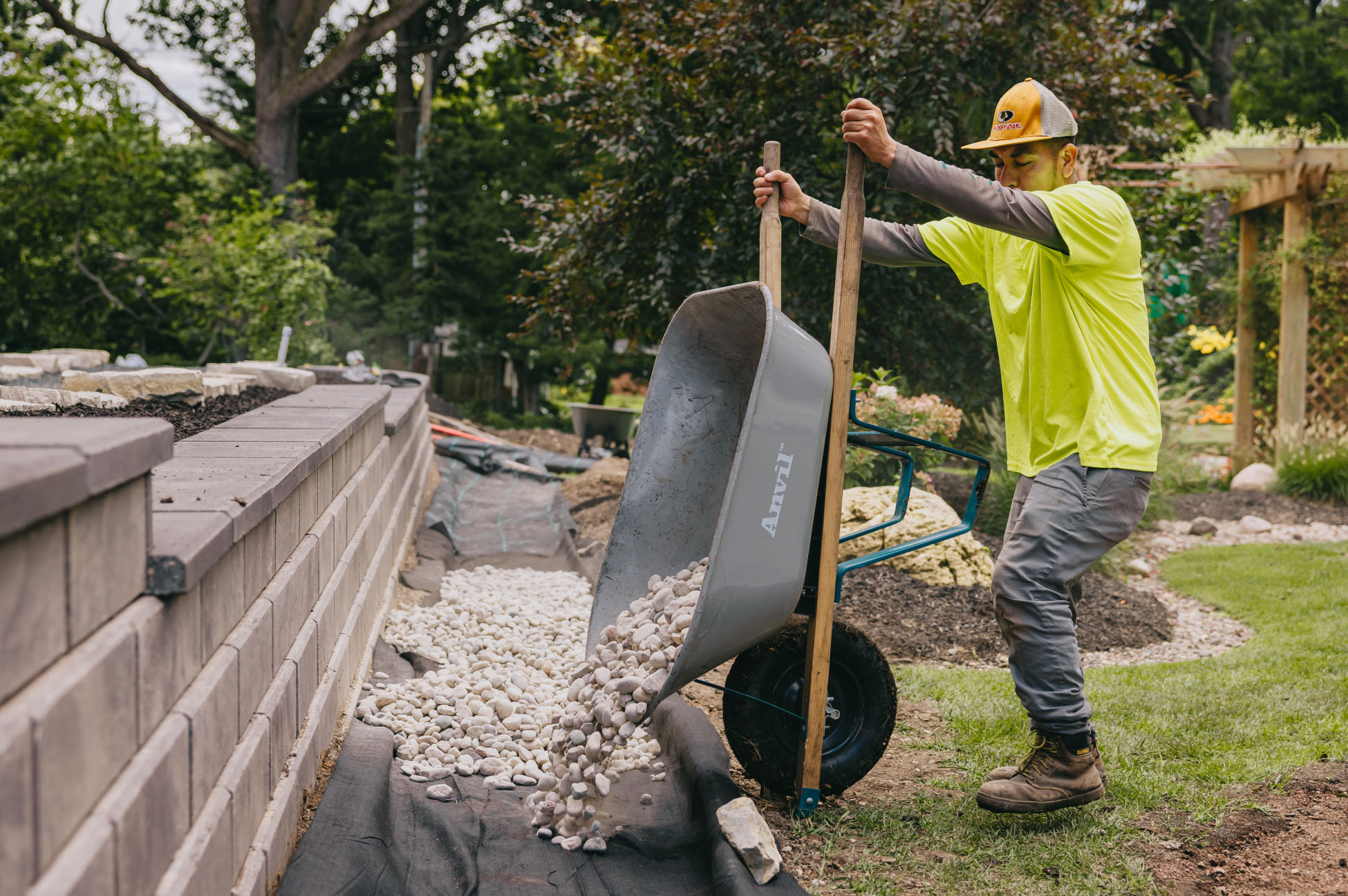
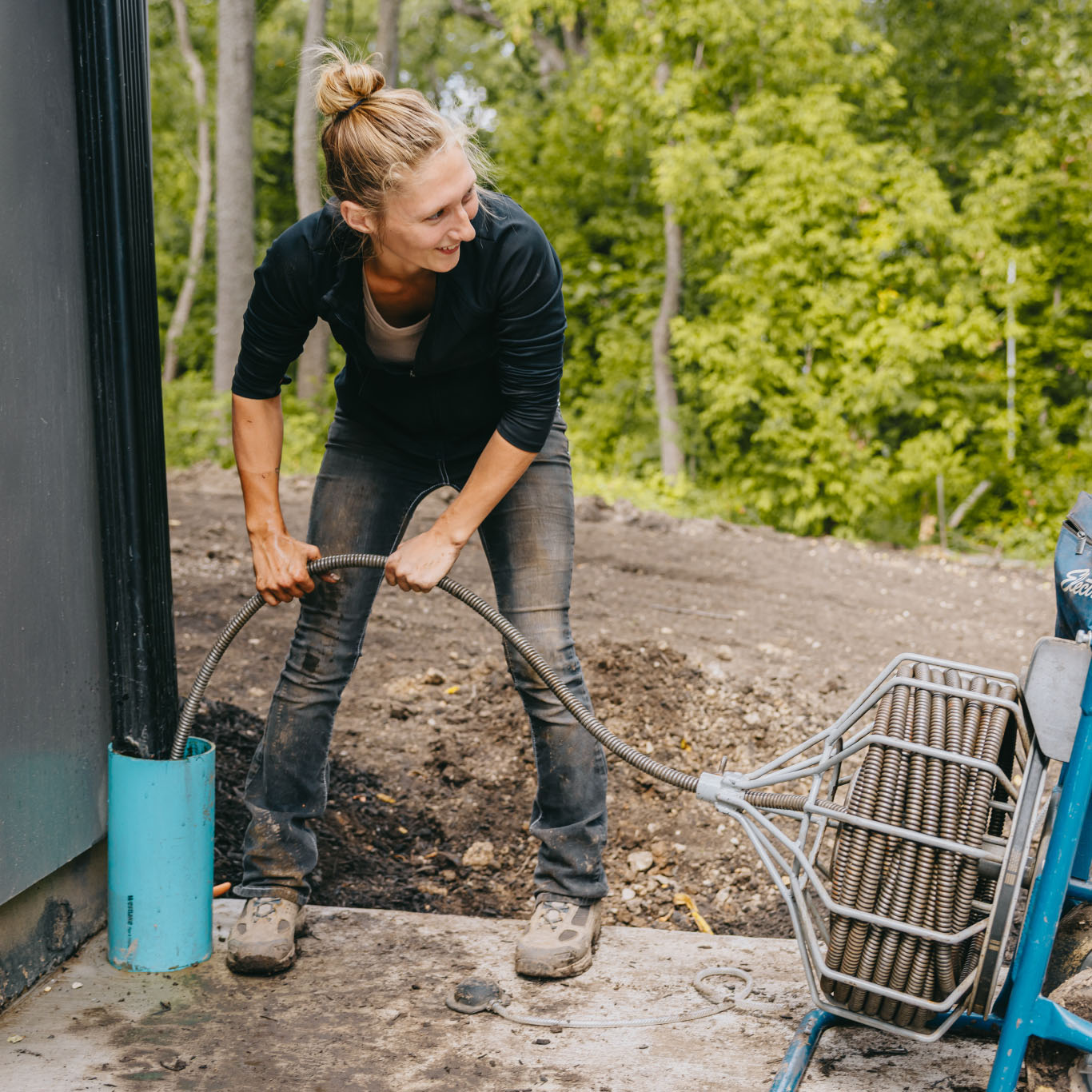
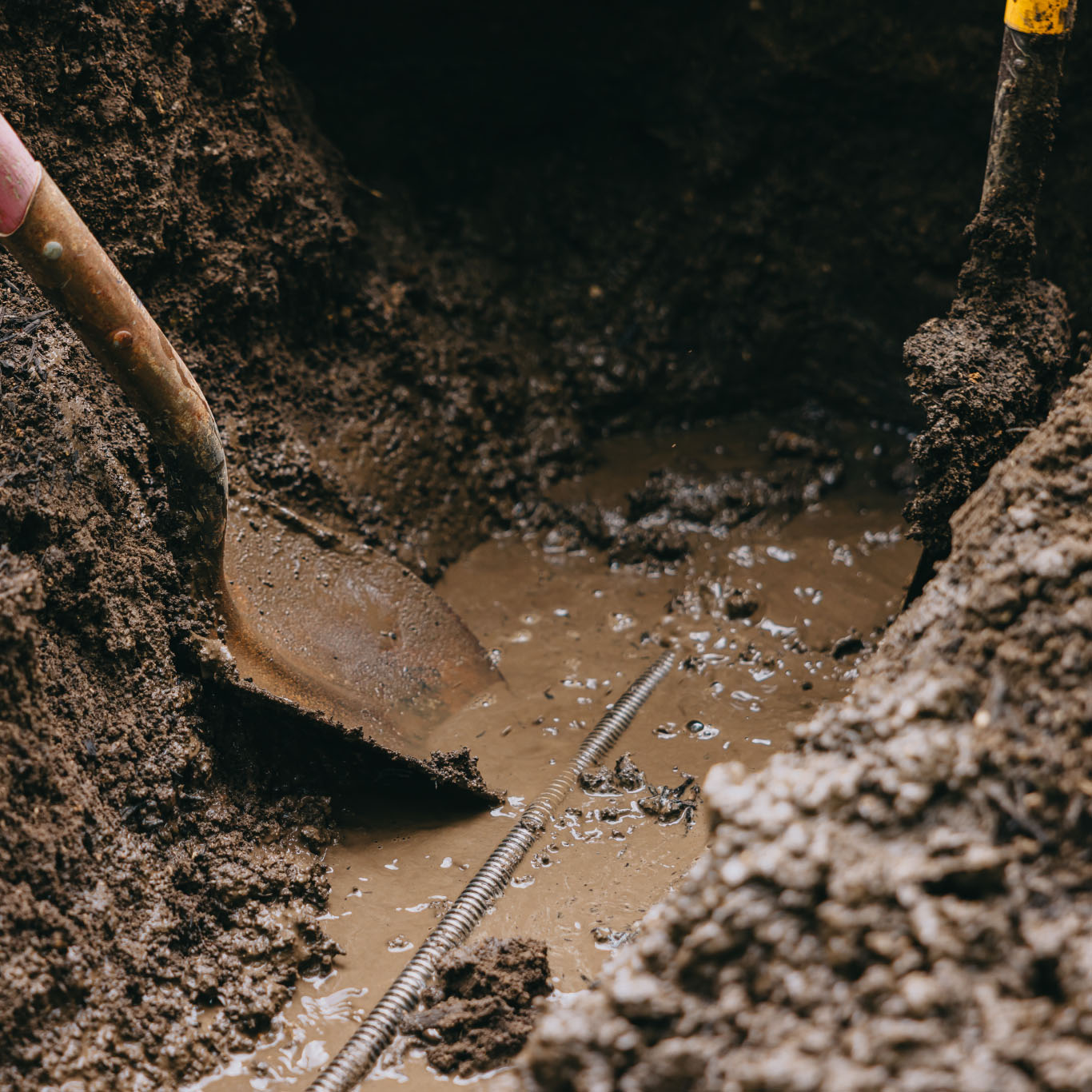
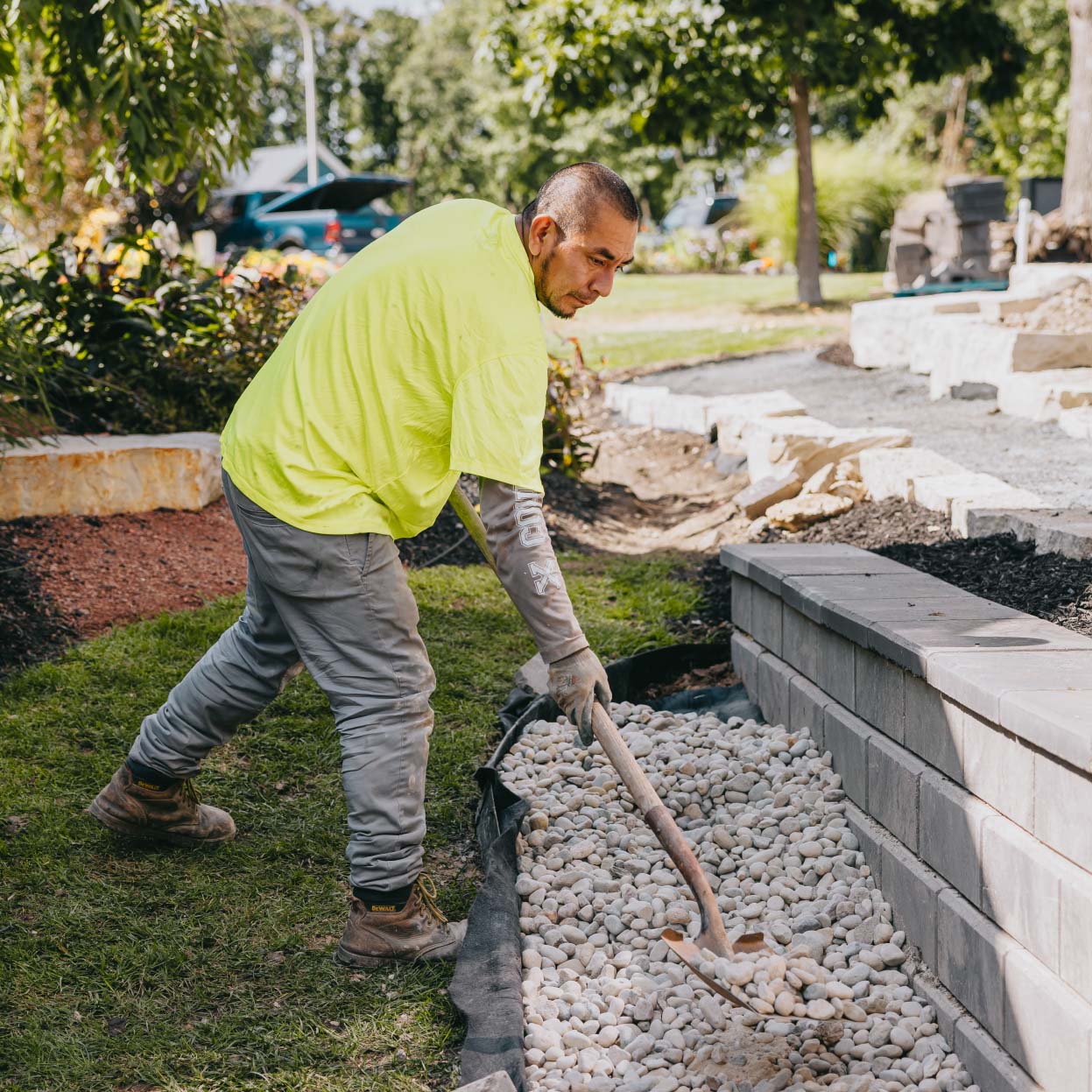
Our skilled team reshapes the land, installs drainage systems, and stabilizes the area to ensure long-term durability and beauty.
Step 4
Final Testing and Inspection
We test all water flow paths and systems to ensure they perform perfectly and leave your property ready to thrive.
Build Your Landscape on a Foundation You Can Trust.
At Custom Scapes & Designs, we believe that beauty starts with stability. Our team brings engineering know-how, landscaping artistry, and a commitment to quality to every drainage and grading project.
We don’t just make your landscape look great we ensure it lasts through every season, every storm, and every challenge.
Serving Cortland and Nearby Towns
Based in Cortland, we fix standing water and regrade yards for homeowners in DeKalb, Sycamore, Maple Park, Elburn, St. Charles, Geneva, Hinckley and nearby towns. See the grading on our Richards Residence project, or read Yard Drainage 101 to see what's going on with clay soil. Call us for a free estimate.
Common Questions
Find answers to common questions about our landscaping services and process.
Standing water usually comes from one of three things: improper grade pitching water back toward the house, compacted clay soil that will not absorb runoff, or downspouts dumping concentrated volumes in one spot. Northern Illinois has heavy clay in much of DeKalb and Kane counties, which makes drainage a common issue. Our fixes range from regrading and downspout extensions to French drains, dry wells, swales, catch basins, and pop-up emitters — chosen based on what is actually causing the water.
Simple solutions like buried downspout extensions or short gravel drains typically run $800 to $2,000. Mid-range French drain systems with one or two catch basins in a standard yard run roughly $3,000 to $7,000. Larger, complex systems with significant excavation, multiple drains, or pump-assisted runs can range $10,000 to $15,000 or more. Clay-heavy northern Illinois soils tend to push installs toward the upper end of these ranges because excavation takes longer. We quote after diagnosing the source, not by linear foot alone.
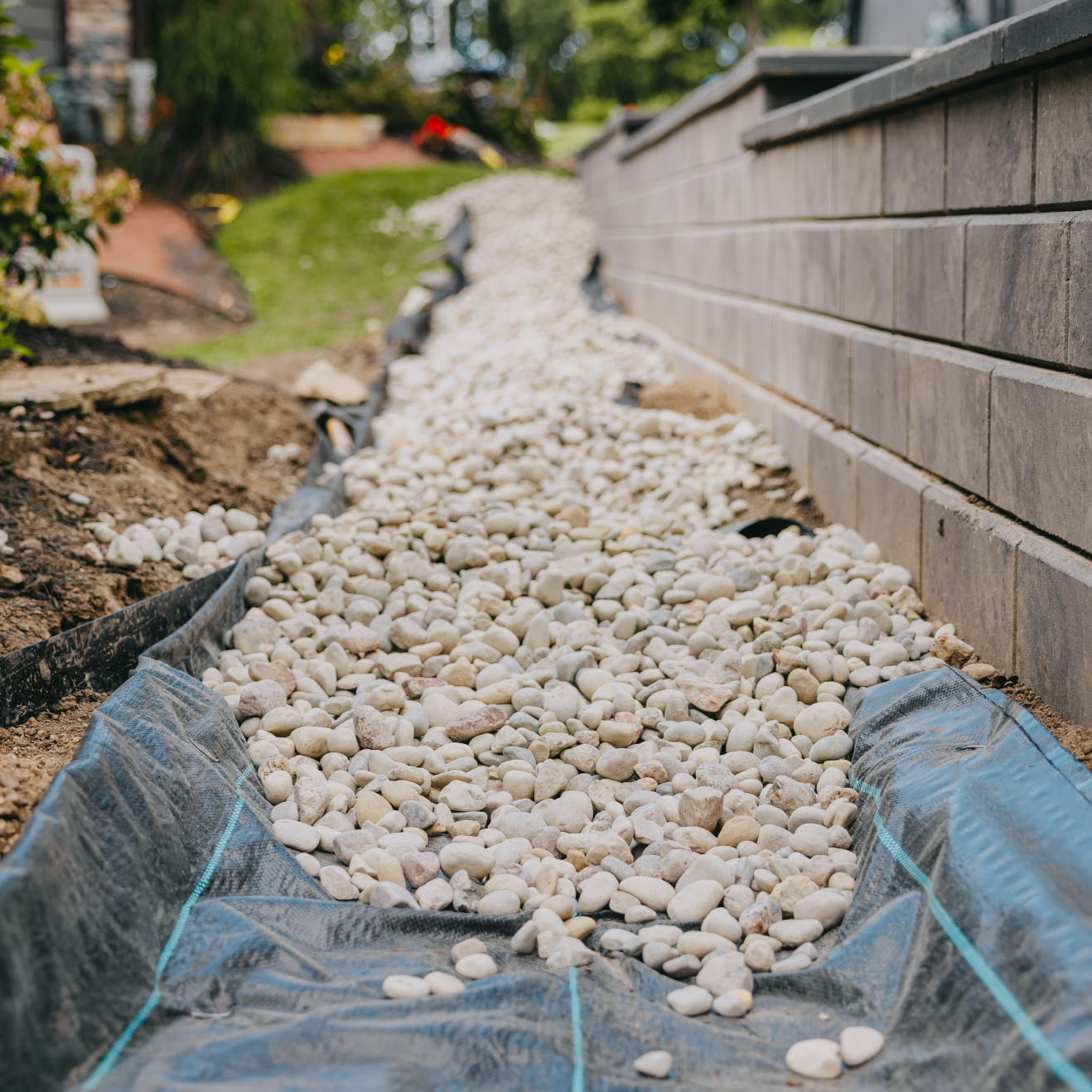
A French drain is a gravel-filled trench with a perforated pipe at the bottom, wrapped in filter fabric, that collects subsurface water and routes it to a safe outlet. It is the right call when you have chronic saturation, surface water that lingers for days, or wet basement walls fed by yard runoff. It is not the right call when the actual problem is grading or a single downspout — those have simpler, cheaper fixes. We diagnose first, then recommend.
In most cases, yes. We use targeted trenching that stays as narrow as the job allows, route lines through bed edges or along property lines when possible, and stage the work to protect lawn and plantings. For mature landscapes we plan access routes carefully and restore disturbed turf with fresh sod or seed. A properly designed system disappears once the grass grows back — you should only see the discreet drain inlets and pop-up emitters.
Yes. Regrading and drainage are often the same conversation. Lawns should slope away from the house at roughly a 2% to 5% pitch for the first ten feet, and a yard that does not is fighting itself no matter how many drains you install. We assess grade as part of every drainage diagnosis and recommend regrading where it will actually solve the problem — sometimes it is the whole fix, sometimes it works alongside a drain system.
Spring through fall, with a sweet spot in mid-spring and early fall when the ground is workable but not saturated. We cannot effectively trench frozen ground, and mid-summer droughts can mask the very problems we are trying to diagnose because the soil temporarily dries out. If your basement is taking on water or you have visible erosion, do not wait for ideal weather — call us and we will work the season we have.
Need more help?
Reach out to us directly and we'll answer whatever you need to know.
Protect Your Property. Strengthen Your Landscape.
Don't leave your landscape’s future to chance. Contact us today to schedule a consultation and build a property that’s beautiful, healthy, and strong from the ground up.