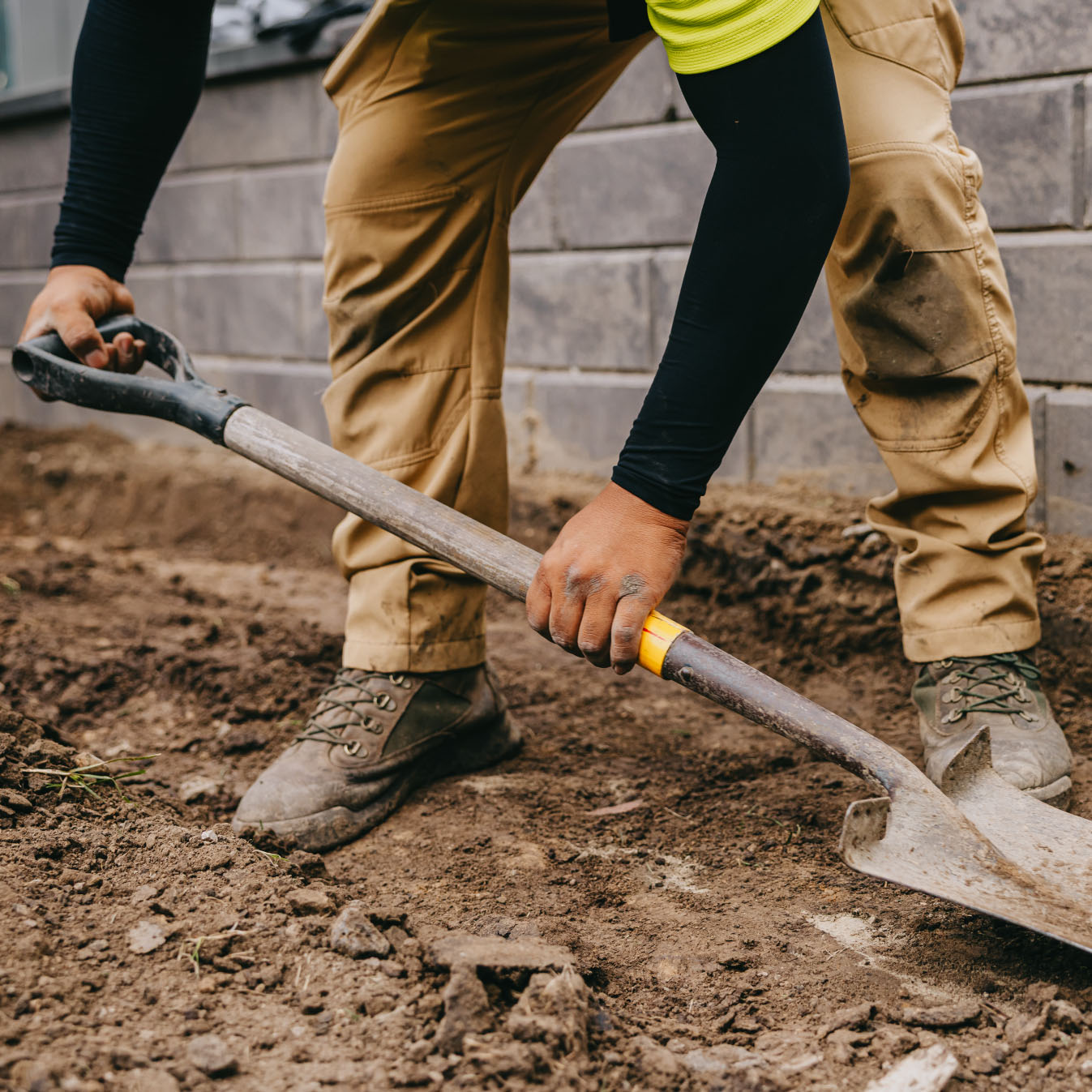
Drainage, budget buffer, design clarity, HOA approvals, seasonal timing — five honest reasons to wait on a paver patio, and what to fix before you sign.
You've been planning a paver patio for two summers. The Pinterest board is at 80+ pins. You've talked to three contractors. The budget is approved. And every time you're about to sign, something feels off and you push it another month.
That instinct might be right. Most homeowners who delay a patio decision wish they'd waited longer — not less. Almost no one regrets spending another month getting it right. The mistake is the rushed install: ground frozen wrong, drainage ignored, design not finalized, scope creeping after the contract. This article walks through five honest reasons you might not be ready for a paver patio yet, and what to do about each one.
We write this knowing it costs us projects. Some of these reasons mean you should wait six months. A few mean you should wait two years. We'd rather you build the right patio later than the wrong patio now.
If any part of the planned patio sits over a wet spot, a low area that ponds, a soggy lawn section, or anywhere near a downspout that dumps concentrated water — stop. Pave over a drainage problem and you've installed a permanent water trap. The patio will heave, the joints will fail, and the wet spot becomes a wet patio that grows algae and ice in winter.
The fix isn't a French drain installed alongside the patio. It's diagnosing what's causing the water and fixing the cause first. Sometimes it's a grading issue. Sometimes it's a downspout management problem. Sometimes it's a saturated clay subgrade that needs proper drainage infrastructure built in before any base aggregate touches the soil. Read more on this in our drainage and grading service overview.
What to do: delay the patio install. Get a drainage assessment. Fix the water issue. Then build the patio over a properly graded, dry subgrade.
Most paver patio projects come in within scope. Some don't. The honest variables that swing final cost:
If the patio budget is at the absolute maximum and you can't cover a 15–20% overage without stress, you're not ready. Add a contingency line or wait until you can.
What to do: save the additional 15–20% before signing. Build with margin for the things you can't see from the quote.
If you're working from a sketch, a verbal description, or a top-down line drawing, you don't actually know what the patio is going to look like. You're going to find out at install time — when changes cost real money.
A 3D rendering of the patio in your yard, viewed from the angles you actually look from (kitchen window, back door, front of the house), eliminates this. You see paver color in your light, edge treatments at your wall lines, sight relationships to your existing landscape, and night-time lighting if you're including it.
Without that step, you're rolling the dice. Sometimes it goes fine. Sometimes you install a patio and realize the proportions are wrong, the materials don't read the way you imagined, or the lighting at night is too dim. Changing those things after install costs significant money.
What to do: get a 3D rendering before signing. Most reputable local design firms include this. The cost (free with build, or as part of a landscape design package) is far less than the cost of regret.
Many northern Illinois subdivisions require HOA architectural review for any visible exterior change. Many municipalities require building permits for patios over a certain size, retaining walls over a certain height, or any work tying into structural elements.
If you don't know what your HOA requires and you haven't checked with your municipality, you're not ready to sign. The risk: install starts, neighbor reports it, work stops, you're paying for fines or a re-permit or worst-case re-doing portions to comply with what you should have known upfront.
What to do: check HOA architectural review requirements (it's almost always in the bylaws). Call your municipality and ask about permit requirements for the patio size and any walls or features. Get any approvals in writing before signing.
The build window in northern Illinois is roughly mid-April through late October for most projects. The bookends are weather-dependent. A wet spring can push the start into May. A dry fall can extend the build into November. Anything outside those windows is high-risk for one or more of:
If you're signing a contract in late October with a planned November start and the contractor is willing, ask why. Reputable firms turn down marginal-season work because the install quality drops. The contractor who'll take the work in any season is either desperate for cash flow or willing to compromise on construction quality.
What to do: if you're outside the safe window, wait for next spring. Use the offseason to finalize design, get HOA approval, save the buffer, and lock the best crew for an April/May start.
Ready to build means:
If all five are true, sign the contract. If one isn't, address it before signing rather than after.
We've turned down work for homeowners who hit one of these flags. Six months later they come back, the flag is resolved, and the install goes flawlessly. Those projects make the case for slowing down better than any guide can.
Waiting doesn't mean doing nothing. The pre-install work that makes the install successful:
This is what a clean, low-stress paver install looks like behind the scenes. None of it is glamorous. All of it pays off the day the project finishes.
Because the install is going to live in your yard for 25+ years. A patio built on a wet subgrade, with an underfinalized design, in marginal weather conditions becomes a problem you'll be calling someone to fix in 3–5 years. Contractors who take that work anyway are either short-term cash-flow-focused or willing to compromise quality for the booking. Reputable design-build firms turn down work that's not ready.
The waiting period varies. If the only issue is budget buffer, that's 3–6 months of saving. If it's drainage, allow 1–3 months for diagnosis and fix, plus a season for settled grade. If it's design clarity, finalize in 3–6 weeks once you commit to a designer. If it's seasonal timing, wait until next spring's safe window. Most flags resolve in under six months. A few (significant drainage rework, major HOA process) take a full year.
Yes — and we recommend this for projects with any complexity. Finalize the design, sign off on the 3D rendering, lock material selections, and book the build crew for next spring. The design ages well. Material availability sometimes shifts, so the build contract usually has a clause to substitute equivalent materials if a specific paver is discontinued before install. The benefit: you get to live with the rendering for 6–12 months before committing to the install — quiet revisions you make during that time are free.
Hosting deadlines. "We're hosting a graduation party in June, we want the patio done by then." If the contractor commits to a tight timeline that compresses out the design phase or the safe-season window, the install quality drops. Almost every rushed project has a story attached — missed permits, drainage issues that became patio problems, design choices the homeowner regrets within a year. If the timeline is tight, host the party on the existing lawn and build the patio properly the following spring.
It depends on whether materials are rising or falling. Over recent years, paver and labor costs have risen slightly. A six-month delay typically adds 3–6% to project cost. That's a small price compared to the value of building the right thing. The math heavily favors waiting if the project isn't ready — the cost of fixing a wrong install dwarfs the cost of inflation on a delayed one.
Find a different contractor. The willingness to say "you're not ready yet" is a strong signal of design-build quality. Contractors who'll take any work without honest scoping conversations are optimizing for booked work, not for finished projects. The 30-minute consultation where someone tells you to wait six months and fix your drainage first is worth more than the quick "yes we can start next month" answer.
A paver patio is a 25-year decision built in a few weeks. The wrong timing, the wrong design, the wrong subgrade, or the wrong budget margin shows up in years 3, 5, and 10 — not on install day. Waiting six months to address a flag usually saves significant money and stress long-term.
If you've been delaying for a reason you can't quite articulate, listen to that. Talk to a designer about what specifically feels off. Most of the time, the gut check is pointing at something real — drainage, design clarity, budget margin, or seasonal timing. Address it now. Build later. The patio is going to be in your yard for 25 years either way.
If the flag is drainage, Yard Drainage 101: Fixing Standing Water in DeKalb & Kane County Clay Soil is the prerequisite read — it walks through what's causing the water and what the real fix is.
Related reading
Ready when you're ready. When the flags are resolved, our patios and hardscapes service is here — or request a free site walk now and we'll help you identify which flag is yours.