Pondless waterfalls vs ponds for a DeKalb or Kane County backyard: honest cost, maintenance, safety and winterization comparison for our climate.
You've wanted a water feature for years. You can picture sitting on the patio at dusk, the sound of moving water in the background. But every time you start researching, the choice between a real pond and a pondless waterfall gets confusing fast — maintenance, kids, safety, mosquitos, cost. It feels like a yes/no with a lot of asterisks.
For most DeKalb and Kane County backyards, the choice between a pondless waterfall and a true koi pond comes down to three honest variables: how much sound vs. visual presence you want, what kind of maintenance commitment fits your life, and whether you want fish. This guide compares both options across cost, install, maintenance, safety, and climate fit for our market — with the honest take that pondless waterfalls win for most backyards, and where ponds make sense when they do.
For most homeowners in DeKalb and Kane counties, a pondless waterfall is the better fit. The reasons:
A true pond is the right answer when you specifically want fish, aquatic plants, or a year-round water-feature ecosystem to manage. Without those motivators, the pondless option does what most homeowners actually want at a fraction of the upkeep.
A pondless waterfall recirculates water through a hidden underground reservoir (typically a buried basin filled with stone) and pumps it back up to a waterfall feature. The water you see flowing is real and continuous; the "pond" at the bottom is not visible — it's underground stone that the water flows through and disappears into.
Key characteristics:
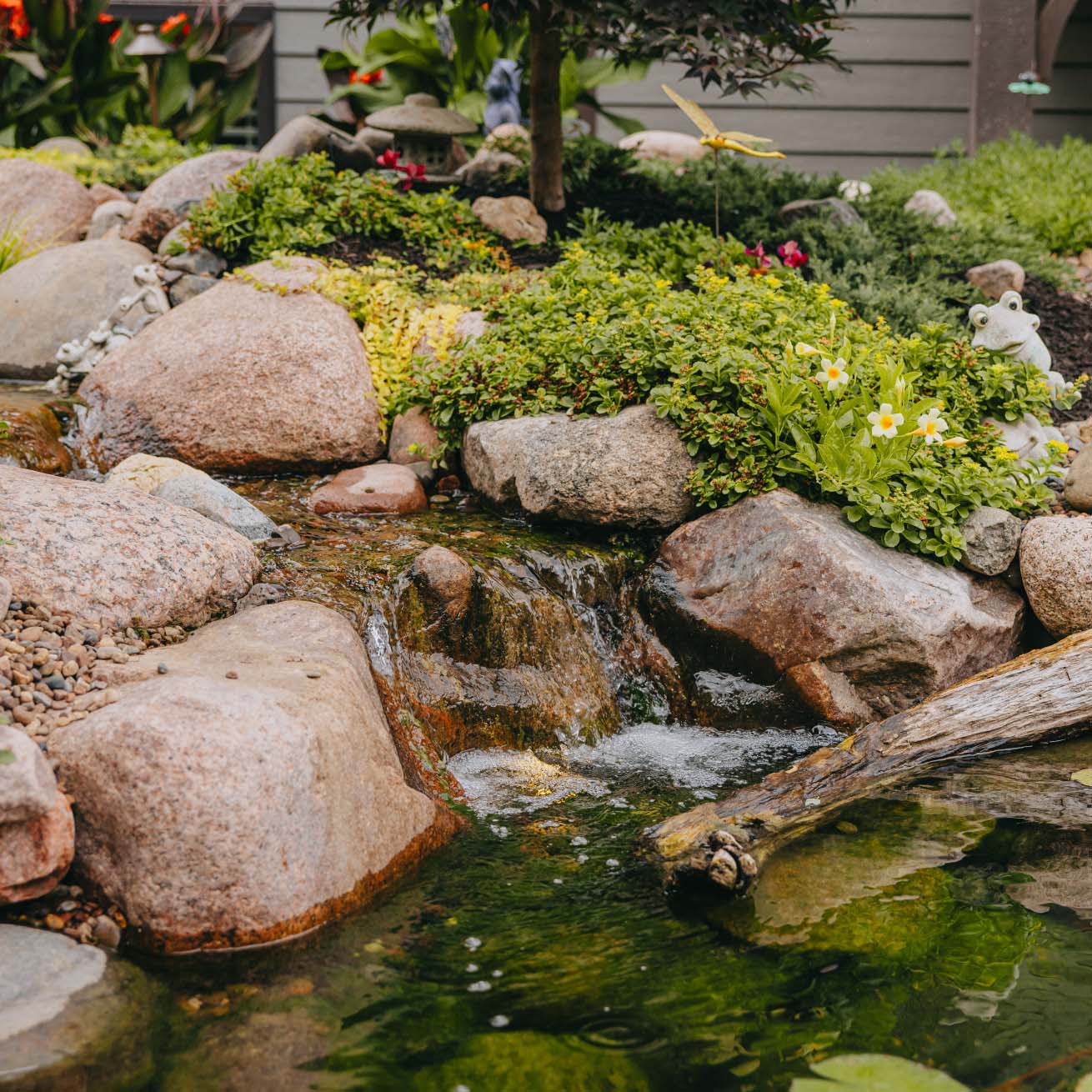
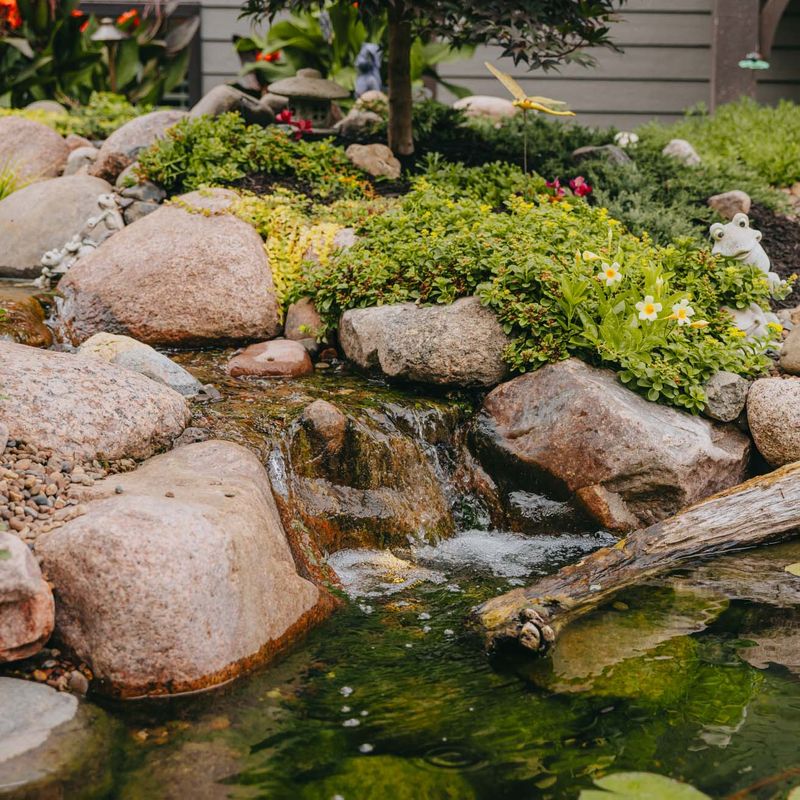
A true pond is a constructed water body — typically 6 inches to several feet deep — lined with EPDM rubber or comparable, often planted with aquatic plants and sometimes stocked with koi or other fish. Water is visible, accessible, and supports an ecosystem.
Key characteristics:
| Feature | Pondless | True Pond |
|---|---|---|
| Small (basic feature) | $5,000 – $10,000 | $8,000 – $15,000 |
| Mid (custom design, larger basin) | $10,000 – $20,000 | $15,000 – $30,000 |
| Premium (boulder waterfall, lighting, advanced filter) | $20,000 – $40,000+ | $30,000 – $75,000+ |
Ponds run higher because liner, filtration, plumbing complexity, and ecosystem setup all add to the install scope.
| Task | Pondless | True Pond |
|---|---|---|
| Weekly inspection / debris | Minimal | Required, esp. with fish |
| Filter cleaning | Monthly in season | Monthly+ with mechanical filtration |
| Water chemistry | None | Tested monthly with fish |
| Aquatic plant management | None | Seasonal |
| Algae control | Minimal (reservoir hidden) | Active management |
| Annual professional service | $400 – $800 | $1,200 – $3,500 |
| Winterization | Easy (drain, store pump) | Complex (fish, heaters, aeration) |
The maintenance gap is the biggest practical difference. A pondless waterfall is closer to a fountain in upkeep. A pond is a small ecosystem you actively manage.
Pondless — no standing water means a young child or pet stepping into the feature gets wet but doesn't have a drowning hazard. No HOA pool-fence-style regulations typically apply. We see this as the deciding factor for families with kids under 5.
Pond — standing water deeper than a few inches is a real risk for young children. Many HOAs and municipalities require fencing or barriers around ponds depending on depth and surface area. Pet owners with curious dogs (especially water-loving breeds) need to plan for the pond becoming a swimming spot. Liner punctures from claws are a real issue.
Both can be managed, but the management differs:
For northern Illinois, where mosquito season is intense from June through August, this matters.
Pondless — drain the basin, remove and store the pump, blow out the lines if exposed. Done in an afternoon. Restart in spring with a hose refill and pump install.
Pond — depends on whether you have fish:
For a homeowner who travels in winter, the fish-pond winterization commitment is significant.
This is where ponds win for some homeowners. Both options can produce strong waterfall sound (a 10-foot vertical waterfall feature sounds the same whether it flows into a hidden reservoir or a visible pond). But a pond:
If you specifically want the visible water body as a design element — not just sound — a pond delivers something a pondless can't. For most homeowners, the moving water during seasonal months is the primary draw, and pondless handles that.
Northern Illinois has a 5–6 month dormant season for water features. Both options work in our climate but with different practical realities:
The "dormant for 5 months" reality is something to factor in. If the water feature is the centerpiece of your outdoor living and you want it visually active even in winter, a pond with appropriate management gives you that. If your outdoor living retreats indoors November through March anyway, pondless is the practical fit.
We build pondless waterfalls through our water features service. The install sequence:
A mid-scope pondless waterfall takes 1–2 weeks of build time.
Yes, significantly. A pondless waterfall has no standing water, no aquatic ecosystem to manage, no fish, and no aquatic plants. Annual professional service runs $400–$800 versus $1,200–$3,500 for a stocked pond. Routine homeowner maintenance is essentially "check the pump and remove visible debris weekly." Pond maintenance is a real ongoing commitment.
Visually, the waterfall feature itself can be identical — the same boulder structure, same water volume, same sound. The pond adds a visible water body at the bottom; the pondless does not. If the centerpiece of your design is the waterfall, both deliver. If you specifically want a visible pond as a design element (with reflections, aquatic plants, fish), the pondless can't replicate that.
Yes. There's no standing water that a child can fall into. The basin is sealed and the visible "bottom" of the feature is stone, not water. Most HOAs and municipalities that regulate ponds (fencing requirements, depth limits) don't have similar restrictions on pondless waterfalls. For families with kids under 5, this is often the deciding factor.
Yes. Winterization is straightforward — drain the basin, remove and store the pump, blow out exposed plumbing. The feature sits dormant from November through March, then restarts in spring. No fish, no heaters, no aerator. Restart in spring takes an afternoon.
Most pondless waterfalls in our market run $5,000 to $40,000+ depending on scope. A small basic feature is $5,000–$10,000. A custom mid-scope with substantial boulder work and lighting is $10,000–$20,000. A premium feature with large boulders, advanced lighting, and significant landscape integration is $20,000–$40,000+. We quote after a free site walk.
No — the systems are fundamentally different. Pondless waterfalls have no standing water body for fish. If you might want fish in the future, design as a pond from the start. The retrofit cost from pondless to pond is roughly equivalent to starting from scratch.
The stone and basin are essentially permanent. The pump is the wear item, typically lasting 5–10 years before replacement (replacement cost $300–$800 for residential pumps). The plumbing lines last 15–20+ years in most installations. With routine annual service and pump replacement on schedule, a pondless waterfall is a 30+ year landscape feature.
Pondless waterfalls win for most DeKalb and Kane County backyards. The maintenance gap, safety profile, and lower install cost stack up in their favor for the majority of homeowners. True ponds make sense when you specifically want fish, aquatic plants, or a year-round visible water body — and you're committed to the active ecosystem management those things require.
The decision is really three questions:
If the answer to all three is yes, build a pond. If any are no — and for most homeowners they are — build pondless.
Before you commit to either, see it in 3D. What Is a 3D Landscape Rendering — And Why It Saves Money Before a Shovel Hits Dirt explains why we render every water feature design before any boulder gets placed — changes on screen are free.
Related reading
Ready to scope a water feature? Start with our water features service or request a free site walk and we'll come see the space.