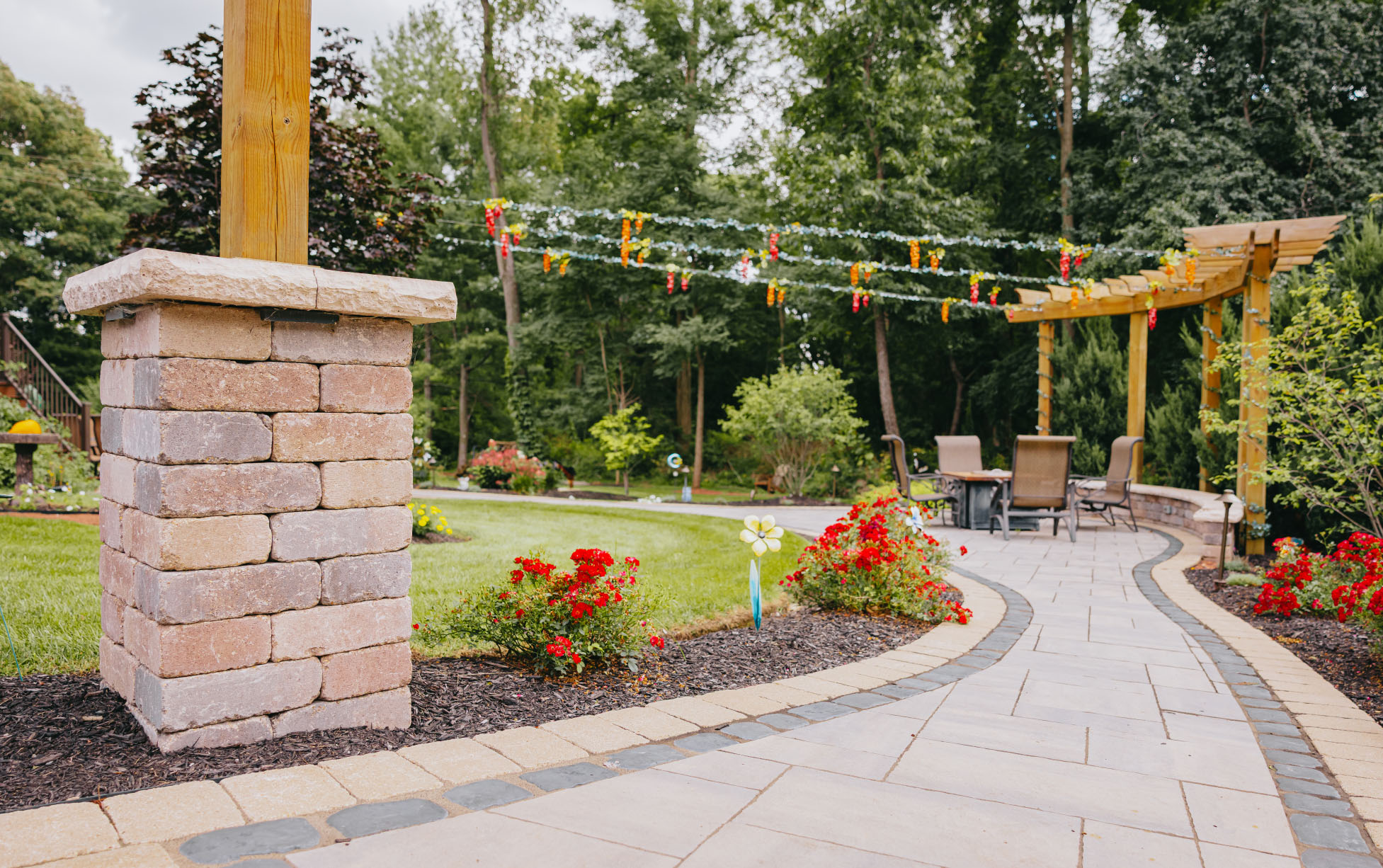
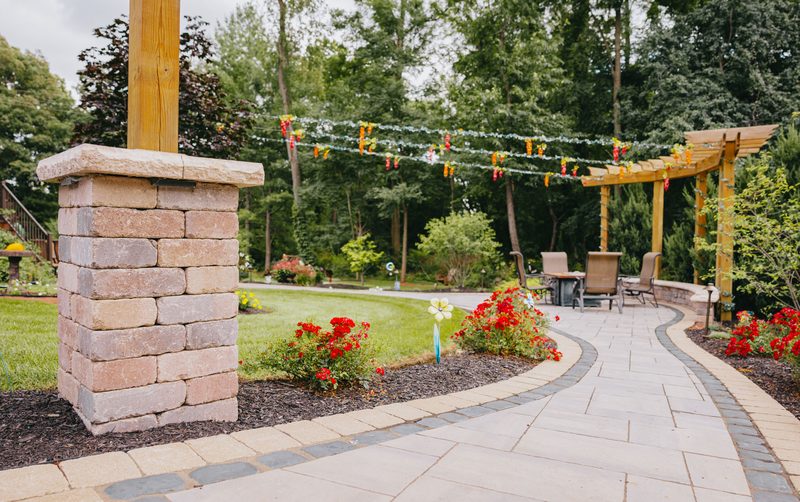
Paver patios in DeKalb and Kane County run $25–$55/sq ft in 2026. Real cost ranges, what drives the price, and what to watch for in a low quote.
You've Googled "paver patio cost" three times this week. You've gotten back numbers ranging from $3,000 to $40,000. None of them feel like they apply to your actual yard.
That's the problem with most paver patio cost content online: it's written for a national average, not for DeKalb and Kane County, and it skips the things that actually move the price on a real project. This guide gives you honest 2026 pricing for paver patio installation in DeKalb and Kane counties — what the ranges actually are, what drives them up or down, and what to watch for when one quote comes in suspiciously low.
Most paver patios in DeKalb and Kane County fall between $25 and $55 per square foot installed in 2026. That puts a typical 300 sq ft backyard patio at $7,500 to $16,500, and a larger 600 sq ft outdoor living space at $15,000 to $33,000.
The national range you see online runs $8 to $26 per square foot, but that's based on simpler installs in markets without freeze-thaw climates, soft clay subgrades, or the permit processes that come with Illinois municipalities. Pricing in our market sits higher because the work that goes under the pavers is more demanding here — base depth, compaction spec, and drainage all need to be built to handle northern Illinois winters.
For reference points by project size:
| Patio Size | Typical 2026 Range (DeKalb & Kane County) |
|---|---|
| 200 sq ft (small intimate space) | $5,000 – $11,000 |
| 300 sq ft (standard backyard patio) | $7,500 – $16,500 |
| 400 sq ft (dining + seating) | $10,000 – $22,000 |
| 600 sq ft (full outdoor living) | $15,000 – $33,000 |
| 800+ sq ft (large entertainer) | $20,000 – $44,000+ |
These are patio-only ranges. Add-ons like seat walls, fire features, pergolas, outdoor kitchens, and lighting carry their own line items.
Nine factors drive nearly every paver patio quote. When two contractors come back with very different numbers, the difference almost always lives in one of these:
Square footage is the biggest single driver, but shape matters too. Curved patios, complex layouts, and patios with multiple elevations require more cutting, more pattern planning, and more labor per square foot than a simple rectangle.
Material cost ranges from roughly $3 to $15+ per square foot for the pavers alone, depending on brand, style, and tier. Unilock, Belgard, Techo-Bloc, and County Materials each have entry, mid, and premium lines. Tumbled, chiseled, or large-format slabs cost more than standard rectangular pavers. The paver you pick can swing a 400 sq ft project by $3,000–$5,000 in material alone.
This is where most low quotes cut corners. A proper northern Illinois base is 6–8 inches of compacted aggregate over geotextile fabric on clay subgrades. Skip an inch of base or skip the fabric and the patio will hold up for 2–3 winters before it starts settling.
If there's an existing slab or old patio that needs to come out, demo and haul-off add $3–$8 per square foot depending on slab thickness and access.
A backyard accessible only through a 36-inch gate with stairs is a very different job than a yard you can drive a skid steer into. Tight access can add 15–25% to labor because everything moves by wheelbarrow.
A flat-lot install with good existing drainage is cheap. A sloped lot with a swale to redirect, downspouts to extend, or a site drainage assessment that turns up clay-soil water problems can add $2,000–$8,000 of pre-patio site work. We address this in the design phase — you should never build a patio over a drainage problem.
Many suburbs waive permits for at-grade patios under 200 sq ft, but rules differ from town to town across DeKalb and Kane counties. Walls over 4 feet typically require an engineered drawing. Permit fees range from $50 to $500, but the bigger cost is the time to pull them — add 2–4 weeks to project timing if a permit is needed.
Every add-on is its own line item:
A quality sealer slows color fade and locks polymeric sand into the joints. Initial sealing is included in every Custom Scapes & Designs paver install. Reseal service every 3–5 years runs roughly $1.50–$3.00 per square foot.
If one quote comes in at half the price of the others, the difference is almost never that they're "more efficient." It's that the scope is different. Things to verify line by line before signing:
A quote that hits all of these is a fair comparison to ours. A quote that skips half of them is a different project at a different price.
We quote after a free site visit because every yard is different. The walk-through covers:
The design and rendering process is what saves the most money long-term. Changing your mind on screen is free. Moving a finished wall is not.
Most paver patios in DeKalb and Kane County run $25 to $55 per square foot installed in 2026. Where a project lands in that range depends on paver brand, base depth, demo of existing slab, site access, drainage work, and add-ons like seat walls, steps, or a fire feature. National figures of $8–$26 per square foot don't reflect Illinois freeze-thaw construction standards or our clay-soil subgrade requirements.
It varies by municipality. Many northern Illinois villages waive permits for at-grade patios under 200 square feet and retaining walls under 3 to 4 feet, but rules differ from town to town across DeKalb and Kane counties. Walls over 4 feet typically require an engineered drawing. We confirm requirements with your local building department before breaking ground and pull permits when needed.
A properly installed paver patio in our climate should last 25 to 30 years or more. The key is what's under the pavers, not the pavers themselves. Freeze-thaw cycles destroy patios with shallow or poorly compacted bases because trapped water expands and lifts the surface. We build to a base depth and compaction spec rated for Illinois winters and use pavers with low water absorption.
Poured concrete is the lowest upfront cost but cracks predictably in our freeze-thaw climate and is hard to repair invisibly. Stamped concrete looks elevated but shares the same cracking issue. Pavers cost more up front, flex with ground movement instead of cracking, can be lifted and reset if a section ever shifts, and offer the widest range of finishes. For premium, long-term outdoor living in northern Illinois, pavers usually win on lifecycle cost and looks.
The difference is almost always in the scope, not the contractor's efficiency. Common things missing from low quotes: shallow base depth (4 inches instead of 6–8), no geotextile fabric on clay soil, regular sand instead of polymeric in the joints, no edge restraint, no sealing, no permit handling, no warranty. Get every line item in writing and compare quotes side by side before signing.
Fire pits and small features can usually be added later. Anything requiring a gas line, electrical, or footings tied into the patio slab should be designed in from the start — retrofitting is significantly more expensive than including it during the initial build. We always ask about future plans during the design phase so we can rough in what's needed.
A paver patio in DeKalb and Kane County is a long-term investment that, built right, lasts 25–30 years. Built wrong, it starts failing within 3–5 winters. The price difference between a quality install and a corner-cutting one isn't huge — maybe 15–20% — but the long-term cost difference is enormous. Get every line item in writing, compare scopes (not just prices), and prioritize what's under the pavers, not just what's on top.
Ready to see what a real paver patio quote looks like for your yard? Request a quote and we'll come walk the site. Or see paver projects we've built in DeKalb and Kane County to get a feel for what's possible.
The price tag tells you what the patio costs. How a Paver Patio Actually Gets Installed in Northern IL shows you what's underneath the price — the base depth, compaction spec, geotextile fabric, and drainage work that determine whether your patio lasts 25 winters or fails in three.
Related reading
Ready to walk through your patio project? Schedule a free site visit through our patios and hardscapes service or request a quote and we'll come see the space.